Skip to content

By Rabecca Mwila
When the Soil Washes Away, Women Bear the Heaviest Burden
In many rural communities across Southern Africa, the day begins before the sun rises.
For women, this means fetching water, preparing meals, tending to the children and working the family plot. They are the backbone of household food security, often responsible for planting the diverse vegetables and legumes that keep their families nourished.
But a silent thief is stealing their hard work: soil erosion.
When heavy rains hit a sloping, bare field, the dark, fertile topsoil washes away and the crops fail. The land becomes hard and cracked. When the local streams dry up or turn brown with mud, it is the women and girls who must walk further and work harder to find clean water.
Why Ignoring Women in Agriculture Fails Everyone
Industrial and conventional farming models have historically marginalised women. They promote cash crops controlled by men, rely on expensive chemical inputs that women rarely have the money to buy, and ignore the traditional, ecological knowledge that women hold.
As the Kusamala Institute’s Why Sustainable Food and Farming Systems Matter for Malawi brief highlights:
“Compared to men, women own less land, have less control of food production choices and are more food insecure.”
The brief also reveals a powerful truth: when women are empowered, entire communities thrive.
“Agroecology views women as playing a central role in food and farming systems. They tend to plant a greater diversity of crops and are responsible for ensuring healthy and traditional diets. Long-term research shows that household dietary scores increase when gender equity is addressed.”
When women are excluded from soil conservation training, the land continues to degrade. When given the tools, knowledge and the authority to lead, women save the soil and transform their communities.
Taking the A-Frame into Their Own Hands
Across Southern Africa and beyond, women’s farming groups are quietly leading a revolution. They are trading the hoe for a simple, powerful tool: the A-frame.
Instead of waiting for outside experts to tell them how to save their land, these women are mapping their own fields, digging their own trenches and reclaiming their agricultural sovereignty.
Here is how they are doing it, using the proven, low-cost methods from the Kasisi Agricultural Training Centre (KATC) Soil & Water Conservation guide:
- Building the Tool of Empowerment: The A-Frame
Women’s groups gather to build A-frames using materials already on the farm: two 2-metre poles, a 1.5-metre crossbar, a piece of string, and a heavy stone. By calibrating the tool (finding the exact centre mark where the string hangs straight), they can walk across a slope and place a wooden peg wherever the string aligns with the centre. They are literally drawing the contour lines of their own future.
- Digging the Contour Ditch and Ridge
Following the line of pegs, the women work together to dig a trench:
- 30 centimetres deep
- 50 centimetres wide
They take the excavated soil and pile it on the downhill-facing side to create a ridge. This simple earthwork acts like a speed bump for rainwater, forcing it to slow down and sink into the soil rather than washing away the topsoil.
- Locking It In with Grass Strips
To ensure the ridge holds firm, the women plant tuft grasses such as vetiver, Napier, or guinea grass directly into the new ridge. These grasses have deep, fibrous root systems that act like a living net, holding the soil firmly in place. This grass also provides nutritious, chemical-free fodder for their goats and cattle.
- Applying the 3 Golden Rules
The women don’t stop at the trenches. They embrace the 3 Principles of Soil and Water Conservation:
- Disturb the soil as little as possible (reducing deep ploughing to protect soil structure).
- Cover the soil as much as possible (using crop residues as mulch to keep the earth cool and moist).
- Mix and rotate crops (planting diverse, nutrient-rich vegetables and legumes alongside maize to keep the soil balanced and the family fed).
The Ripple Effect: More Than Just Saved Soil
When a woman’s group successfully implements contour farming, the benefits ripple outward:
- Water Security: The trapped rainwater recharges local groundwater, meaning shorter walks to the well.
- Economic Independence: By growing their own fodder and saving their topsoil, women reduce household expenses and can sell surplus produce or milk at local markets.
- Knowledge Transfer: Mothers teach their daughters how to read the land, ensuring the next generation inherits a resilient farm.
- Community Power: Working side-by-side to map and dig builds profound social cohesion, turning isolated farmers into a unified, unstoppable force for change.
Soil conservation is not just an agricultural practice. For women, it is an act of care for their children and their communities.
Support and Scale Women-Led Soil Conservation
You don’t have to be a woman farmer to support this movement. Whether you are an extension officer, a policymaker, a donor, or a fellow farmer, you can help amplify this important work.
Download the free Knowledge Products below for more details.
Contour Practices for Soil & Water Conservation – KATC
Share this visual, step-by-step guide with women’s groups to help them build A-frames and map contour lines.
Why Sustainable Food Systems Matter for Malawi
Use this brief to advocate for gender-equitable agroecology policies and funding at the local and national levels.
How to Make Fermented Liquid Bio-Fertilisers – KATC
Pair soil conservation with natural soil feeding. Women’s groups can brew nutrient-rich bio-fertilisers from cow dung and ash to boost their diverse vegetable plots.
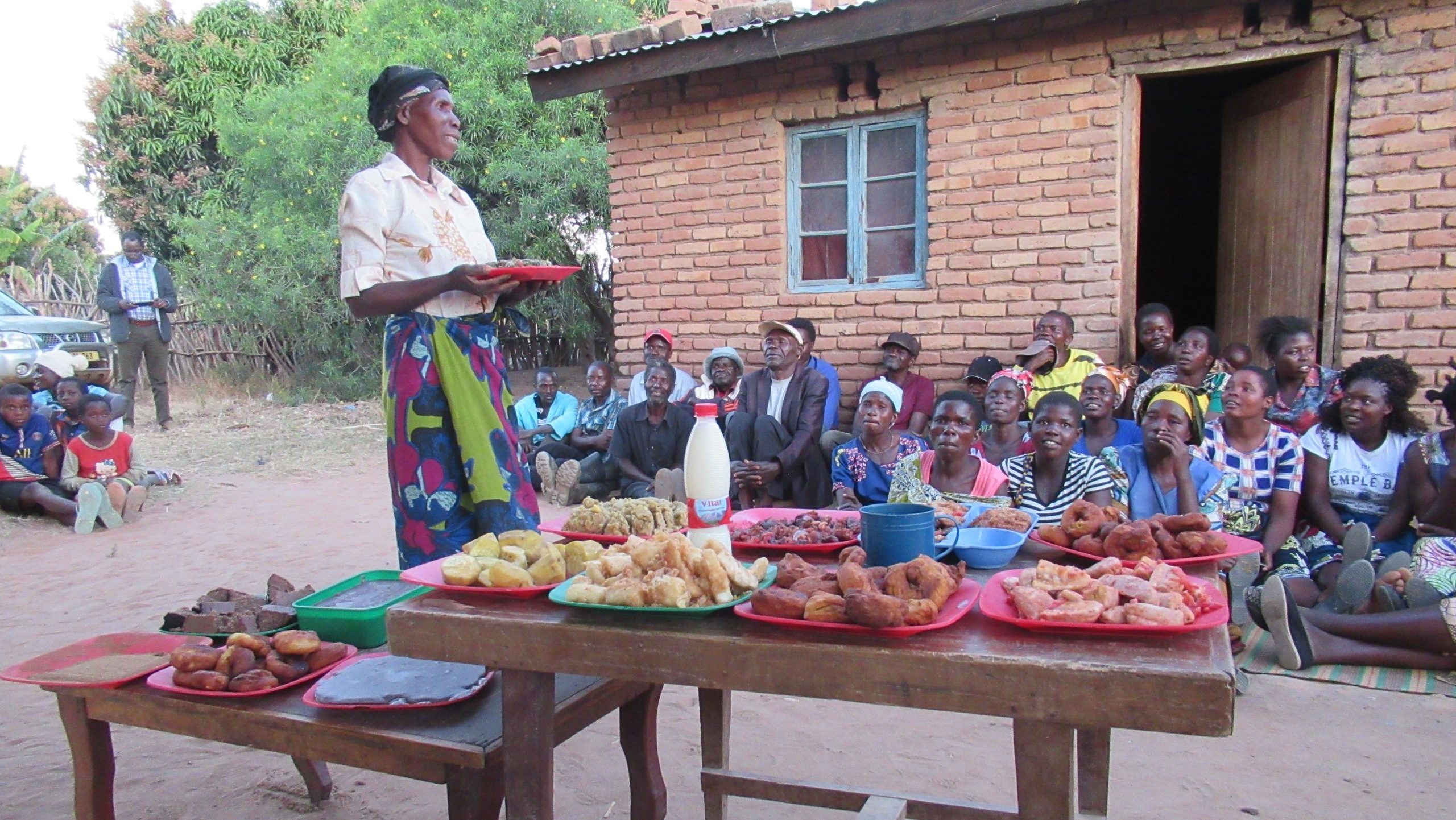
Image Caption: PELUM Zambia Women lead farmers demonstrating how to make organic fertiliser during a farmer training in Zambia. Credit: PELUM Zambia.